
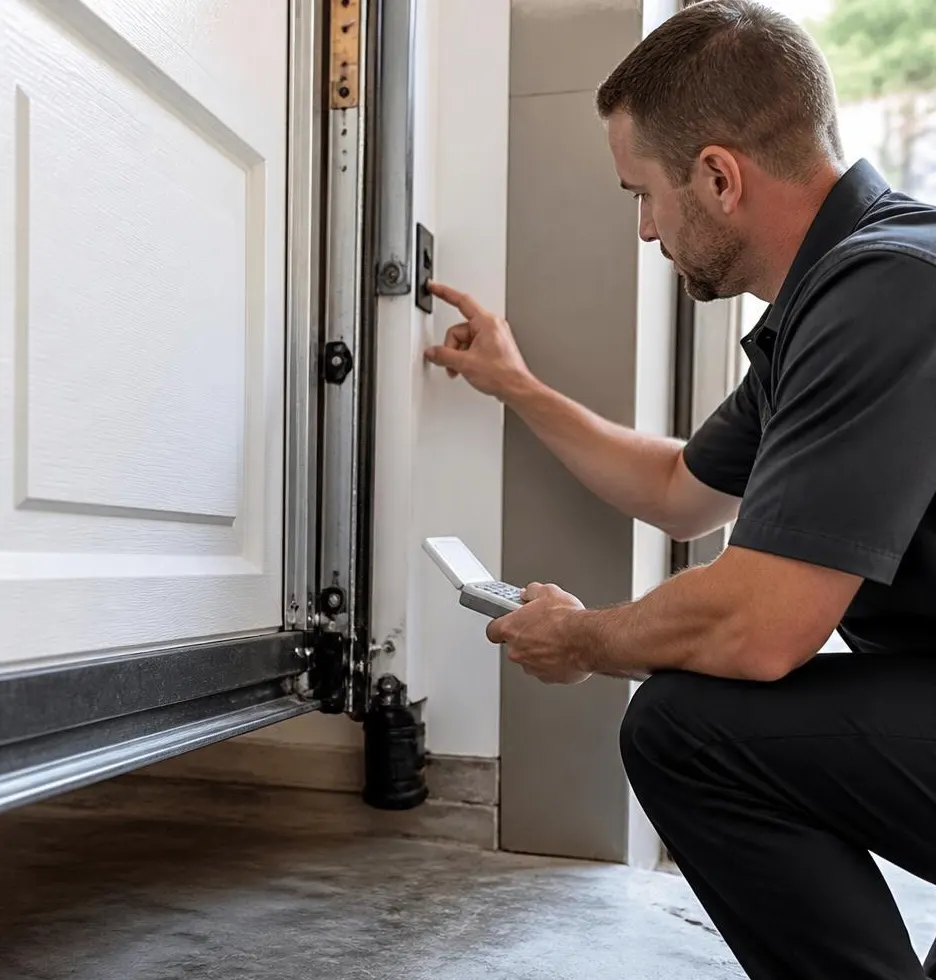
What a Technician Sees on This Call
The call usually starts the same way: a homeowner noticed their garage door panel bowed outward during a windstorm, or the door won't close all the way after a monsoon squall rolled through overnight. When we get out there, we often find bent track sections where wind pressure pushed the door off its rail, rollers that popped loose from years of sun-dried lubricant, or a seam of fine dust packed into the weatherstripping where rain found a way in. None of it looks dramatic from the street, but it tells us the door flexed under pressure it wasn't braced to handle.
Why the Garage Door Is a Home's Weakest Wall
A garage door is the largest moving opening in most houses, and structurally it's held in place by hardware, not a continuous wall. When high wind hits a house, pressure builds inside if the garage door fails or flexes too much, and that pressure pushes outward on the roof and walls from the inside. Standard residential doors are built for everyday use, not sustained wind loads, so panels can bow, tracks can bend, and in a bad enough gust the whole door can come off its rollers. This matters more here because the dry heat already stresses the hardware year-round, so a door that looks fine on a calm day may have less reserve strength than it should when wind actually tests it.
Why This Time of Year Matters Here
Late-season monsoon activity can still roll through into early fall, bringing sudden wind gusts and heavy rain in short bursts, right as the extreme summer heat has spent months baking lubricant out of rollers and hinges and drying out rubber seals. That combination — stiff, sun-fatigued hardware meeting sudden wind load — is exactly when small weaknesses turn into real failures. As the season shifts toward cooler desert nights, temperature swings between hot afternoons and cold nights also cause metal components to contract and expand, which can loosen bolts and brackets that were already under strain.
Track and Roller Alignment
Walk the full length of both tracks and look for gaps between the rollers and the rail, dents, or spots where the track pulls away from the wall bracket. Wind pressure is what usually causes a track to bow outward first, before anything else fails. Tighten the lag bolts holding the brackets to the framing, and replace any rollers that look worn flat on one side — those are the ones most likely to jump the track under a gust.
Spring Tension and Cables
Springs under the wrong tension make the door react unpredictably to wind pressure instead of absorbing it evenly. If the door feels heavier on one side when lifted manually, or closes unevenly, the springs are likely mismatched or fatigued. This isn't a DIY adjustment — torsion springs are under enough stored force to cause serious injury, and it's one of the main reasons spring replacement is a core service rather than a weekend project.
Weatherstripping and Panel Seals
Dried, cracked weatherstripping lets monsoon dust and driving rain push past the bottom seal and side seals during a storm. Press a finger along the full perimeter; if it's brittle or doesn't spring back, it needs replacing before the next storm, not after.
Opener and Backup Power
Sudden storms often come with power flickers or outages. If your opener doesn't have battery backup, a storm at the wrong moment can leave the door stuck open or closed. It's also worth testing the manual release handle now, while conditions are calm, so you're not fumbling with it mid-storm.
Reinforcement Options
For homes that see repeated high-wind events, a horizontal strut kit bolted to the inside of each panel adds real rigidity without replacing the whole door — these typically run in the range of a few hundred dollars installed, depending on door size. For an aging door that's already showing wear, a wind-rated replacement door is worth discussing during installation.
When to Call Sun City Door & Opener
If your door is bowing, dragging, or you hear new grinding or popping sounds when it moves, that's a sign to call before the next windstorm, not after. We handle track and cable repair to correct alignment issues caused by wind pressure, and we can evaluate whether your springs and hardware are still matched to the door's weight and your local conditions. A pre-storm tune-up is often the cheaper path compared to an emergency repair call after a panel fails.
If you're in Sun City, Sun City West, Surprise, Peoria, Glendale, El Mirage, Youngtown, or Litchfield Park and want your garage door checked before the next round of wind and rain, call Sun City Door & Opener today.